Teaser
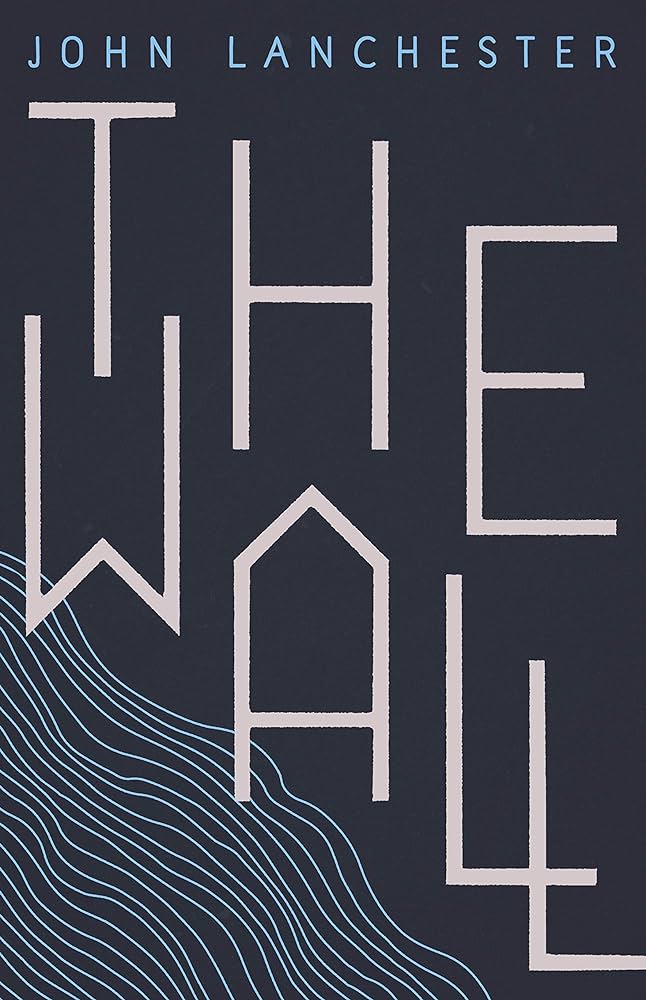
The world is a different place after the Change. Tasked with defending the new Britain, Kavanagh is assigned to the Wall, the first line of defence against the Others who would take over our land . . .
Review
When I hear that a book has been nominated for a Booker Prize, I tend to run a mile. For a start, science fiction books rarely make that list. Those that do tend to be those who say ‘oh no, I’m not science fiction. I’m a real book. I have Big! Important! Messages!’ Books that prove their literary credentials by being depressing from start to finish, with a break in the middle for some nihilism. In short, books that I have little time for. So it won’t come as a surprise that I’ve never heard of John Lanchester before. Although, in a curious twist, I have seen the BBC adaptation of his novel Capital. I remember nothing about it, which is probably not a good sign. However, someone suggested I read this, and I did.
The Wall is a dystopian novel, which immediately made me disinclined to like it. I follow Asimov’s approach to the genre. Essentially, a book that says ‘this is bad, this is bad, this is bad’ is unlikely to thrill me in any meaningful sense. Throw in the fact that this is a literary novel, ripe with allegory and satire, and you’ve got a deadly combination.
I must, however, give Lanchester credit where due. The man can write. With the notable exception of some truly appalling poetry, this book ahs a real flow to it. It’s short and punchy, and over-all very well-realised. Unlike certain other authors I could mention, Lanchester doesn’t write with the intention of drowning the reader in prose. There are a few sentences that stick out for their obviousness, but otherwise he seems happy to let the prose do its work in silence. A good thing to, because little else in this book works.
Because of the obvious allegorical nature, I’m going to forego my complaints about the implausibility of the titular wall. However, Lanchester tries to have his cake and eat it. He talks a great deal about ‘the Change’ that ravaged the world, but also wants to point the accusatory finger at the present day. The blurb describes this book as showing that ‘the young are right to hate the old’ which is certainly a bold position to take. As a young person myself, I personally hated everyone in this book. As with many a dystopia, no one has any redeeming features. Oh, I’m sure some of them are decent people as they mourn the fact that they have to keep slaves in order to enjoy the Lake District in peace, but they’re all uniquely tedious to read about. Not one emerges from the book with any discernible personality. The act as the plot requires, and are essentially interchangeable.
The pacing varies between glacial and random. Slow at first, with the tedium of the Wall, then haywire in the third act with gunfights, explosions, pirates, and mysterious strangers. Plot lines rise and fall without meaning or closure. Lanchester is probably saying something deep and profound here, but he’s expressing himself with all the oratory skills of an old man shaking his fist at the television.
Like the Change itself, The Wall is something of a disaster. It goes nowhere, means nothing, and yet I couldn’t take my eyes away from it. The man can write, if only he wrote something I found more appealing.
Book Stats
- A Standalone Novel
- Published by Faber & Faber
- 267 pages
(This book was selected for me by the Media Death Cult Secret Santa)

 At Boundary's Edge