Teaser
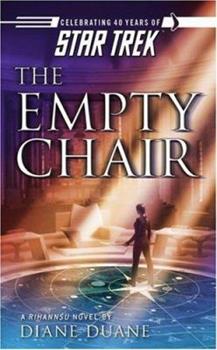
The Romulan people – the Rihannsu – stand on the precipice. On one side stands a gleaming and hopeful future. On the other lies a war that will destroy them all . . .
Review
2006 was a strange time for Star Trek. It was the fortieth anniversary of the show, but the show was not currently on air. Enterprise had only recently been cancelled, and the next onscreen adventure would not appear until 2009. Star Trek was, for all intents and purposes, dead in the water. The good news though, is that Trek had survived in literary form. Free from the need to remain consistent with multiple television shows, the books had the chance to go pretty much crazy. This was the era of the relaunches, which continued The Next Generation, Deep Space Nine, and Voyager beyond what we saw on screen. It also heralded the age of original novel series.
The Rihannsu story began with My Enemy, My Ally, way back in the days of the numbered TOS novels. It wasn’t originally planned as a series, but Duane used elements from that book again in two more novels. Twenty-two years later, we had an actual series of five novels. Other than the continuing adventures of the regular crews, there’s a good chance it’s Trek’s longest-running series. Now, I haven’t read any of these previous novels, which poses a bit of a problem when it comes to context. Especially as The Empty Chair picks up directly where the previous book left off. I’m sure it’s a good continuation of that series, and a strong novel in its own right, but I’m not really in a position to judge any of that. All I can do is work with what I’ve got.
Instead, I want to talk about The Empty Chair‘s place in the broader canon. You see, Duane builds up a compelling version of the Rihannsu, the Romulans. Yet it doesn’t quite fit with what we’ve seen on screen and in other books. This is always the issue of a universe built by so many hands. The inconsistencies are bound to crop up eventually. That is not to say, however, that the rest of the universe ignores these books. Far from it. When other novels use the Romulan calendar, they’re referring to Duane’s creation. In The Romulan War, by Michael A. Martin, the kamikaze tactics of the Romulans is a clear precursor to the Sunseed technology used in this book.
Epic in scope and significant in legacy, The Empty Chair at times feels like a last hurrah. A passing of the torch from one generation of Trek novelists to the next. It wraps up an entire story, and doesn’t leave any hints for what might come next. Nevertheless, future authors came and picked elements to weave into their own stories. Off the top of my head, I can’t name any other books released for the fortieth anniversary. What I do know is that many of the books from the fiftieth anniversary were more concerned with reaching back into that legacy than treading new ground, much as the shows airing during the thirtieth anniversary found ways to incorporate the Original Series.
So no, I don’t really have a lot to say about The Empty Chair, but I do recognise the place it holds in the canon. I’m not particularly inspired to read the previous Rihannsu novels, but I do want to look more into the fortieth anniversary. It also leave me wondering what we might see in 2026, with the sixtieth anniversary coming straight towards us.
Book Stats
- The Rihannsu Saga (#5)
- Published in 2006 by Pocket Books
- 421 pages


 At Boundary's Edge