Teaser
Imperial America is no easy place to live. Yet there is one group who fights the system: the Society of Thieves. Hope for the future is slim, but perhaps what people need is not a hero, but a thief . . .
Review
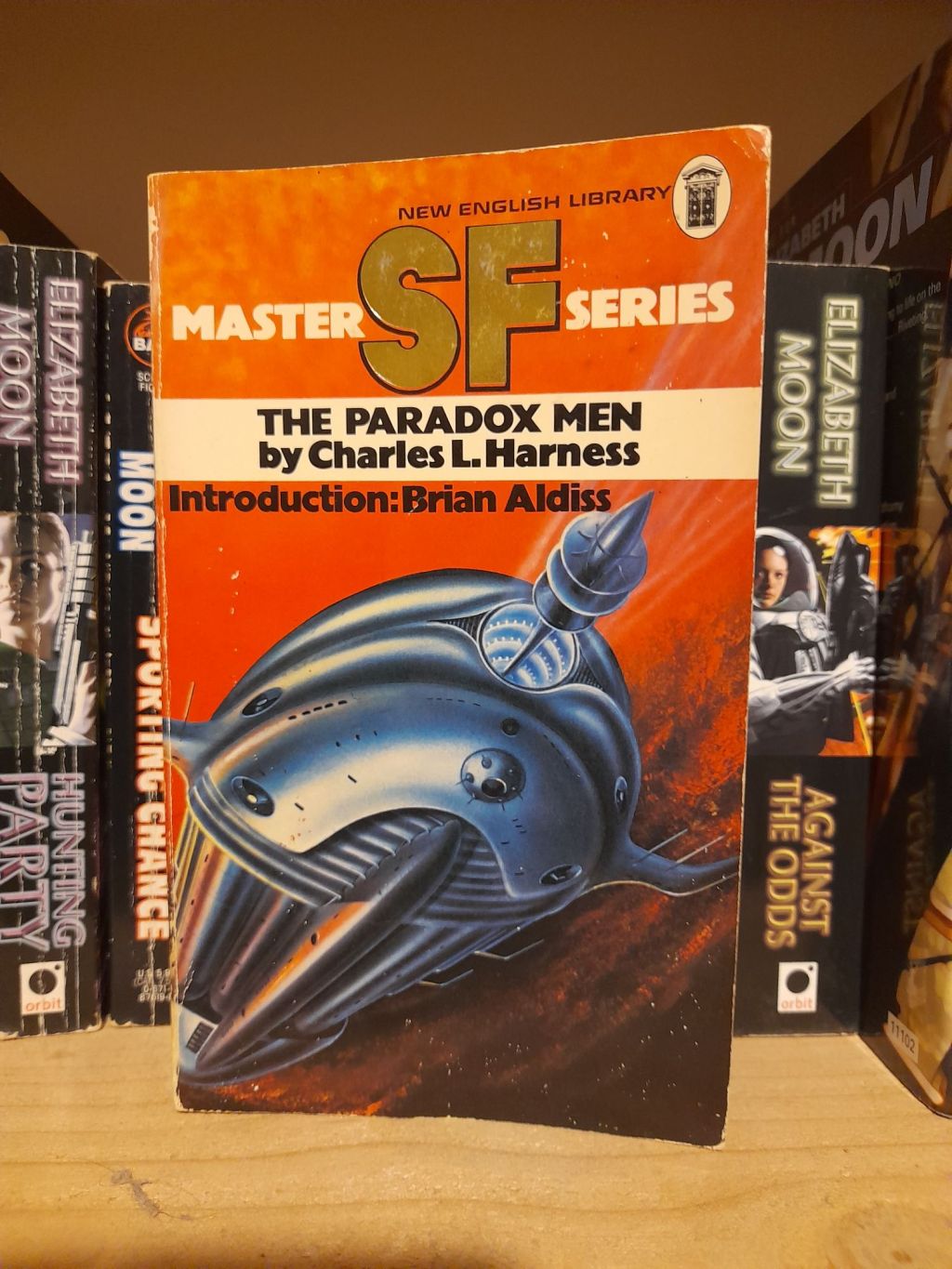
One of my favourite things in literature is collections. Just because books are standalones or written by a variety of authors, it doesn’t mean we can’t group them together. There’s a good chance you’ve read some Penguin Classics, or to be more specifically science fictional, the Gollancz SF Masterworks. Not all collections are as well-known, however. Last year I discovered the Venture SF range from Arrow/Hamlyn Books, and have been having a great time with them. More recently I became aware of another collection. The New English Library’s Master SF Series. There are only sixteen books in the series, but they’re a snapshot of SF history, featuring a few well-known authors’ lesser-known works, and some authors I’d never heard of at all. Charles L. Harness falls into that latter category, so seemed like a good place to start.
Collections like this often contain more than just the books. For The Paradox Men, we have an introduction by SF luminary Brian Aldiss. Aldiss was one of two editors for this collection, along with Harry Harrison, and clearly knows his stuff. There’s an academic flair to his introduction, but Aldiss’ enthusiasm for the book and subject is clear, as is his extensive knowledge of the genre. Aldiss talks a great deal about how the book is often overlooked, but that it holds many surprises for the new reader.
And then, completely unprompted, he tells you a massive spoiler. If you don’t want to know it too, don’t read the introduction, and don’t read this next sentence. Aldiss flat out tells us not only that a character dies, but also which character. Granted, there are some twists, but why on Earth would you include that in the introduction? Surely that’s afterword material. It put a real damper on my reading experience, let me tell you.
In terms of the story itself, this is one that I find hard to talk about. It’s not bad per se, it’s just tricky to get into. Harness reminds me of A. E. van Vogt, in both style and content. The prose is very rough, with the story jumping from scene to scene with no respect for narrative rhythm, and neither characters nor setting stand out. That’s before we get into the questions of identity, memory, and reality that recall the worst excesses of van Vogt’s The World of Null-A. Like van Vogt, however, there is a strangely compelling element to Harness’ writing. In those lucid moments when the book starts to make sense, I was thoroughly engaged.
One part that does stand out is of more interest to SF historians than to casual readers. This book features energy shields that are more effective against faster-moving objects. Thus duels are fought not with pistols and bullets, but with swords. Bear in mind that The Paradox Men was published over a decade before Frank Herbert’s Dune. So the next time someone criticises a book for stealing from Herbert, just remind them that Herbert stole from others too. That’s what all the good writers do, after all.
It’s hard for me to say I was entertained by The Paradox Men, but I definitely found it to be an interesting read. As a piece of SF history it definitely deserves to be remembered, but I can’t help but feel everything it does has been done better by the authors who came after. Aldiss also needs to be a bit more careful about what he includes in his introductions. Nevertheless, this is a promising start to the NEL Master SF Series. if all the books are as interesting a sthis one, I’m in it for the long haul.
Stats
- A Standalone Novel
- First Published 1953
- 159 Pages


 At Boundary's Edge