You might have heard of reading slumps, when you just can’t read no matter how much you try. I have the opposite problem. When I’m stressed, I throw myself into fiction. Given, you know, the state of the world, I’ve been stress reading a lot this month. The good news is that I therefore have another batch of quick reviews to throw your way. These are all part of Vintage SF Month, but all of them proved to be a struggle in one way or another. Let’s take a look:
The Skylark of Space, by E.E. ‘Doc’ Smith
Originally published in 1928, Smith’s story has a strong claim to the title of first space opera. It is an undeniably rough story, more in keeping with Burroughs than Asimov, but equally undeniable is the sense of adventure it conveys. DeQuesne is a great villainous foil, Seaton is the perfect manly hero, and Dorothy is the obligatory love interest. By modern standards, it’s very simple fare. Especially when we get to alien worlds and find them peopled by – shock of shocks – green humans! Yet while worlds it portrays are uninspiring to me, it was clearly inspiring to a generation of future SF writers. Skylark serves as the template for future space operas, and it’s easy to see why. A sense of adventure pervades every moment of the book. It is relentlessly paced, and bursting with wondrous sights. Could it do with some major tidying up? Of course it could. Yet even as it stands, it’s hard to deny that it’s a fair bit of fun.
Warm Worlds and Otherwise, by James Tiptree, Jr.
It’s never a good sign when the best part of a book is the introduction by another author. Robert Silverberg’s analysis of Tiptree is good, but the updated version where he eats some humble pie about his assumptions is even better. Unfortunately, I don’t share Silverberg’s high opinion of Tiptree. The stories here are as New Wave as New Wave gets, filled with sex, and structurally all over the place. I know Tiptree is well-regarded, but I found nothing appealing in this collection. Usually I can pick out at least one good story from a selection like this, but none of Tiptree’s work left any real impression on me. I should probably listen to my gut and stop reading New Wave authors.
Swampworld West, by Perry A. Chapdelaine
The term space opera was originally coined a s a pejorative term in spired by horse opera, the old term for what we might now call a Western. Replace the cowboys with spacemen, the Indians with aliens, and the horses with rocketships, and you got the space opera that people despised so much. Broadly speaking, that’s not a fair criticism of the genre, but Swampworld West is very much a Western narrative transposed into space. Though I enjoy a good Western, the human elements of this book were a real drawback. What works in Swampworld West are the speculative elements. The Splurgs are genuinely alien, and the entire biological setup of the book works brilliantly. I haven’t come across Chapdelaine before, but his style of writing is great at setting a scene, especially when introducing the various new aspects of an alien world.
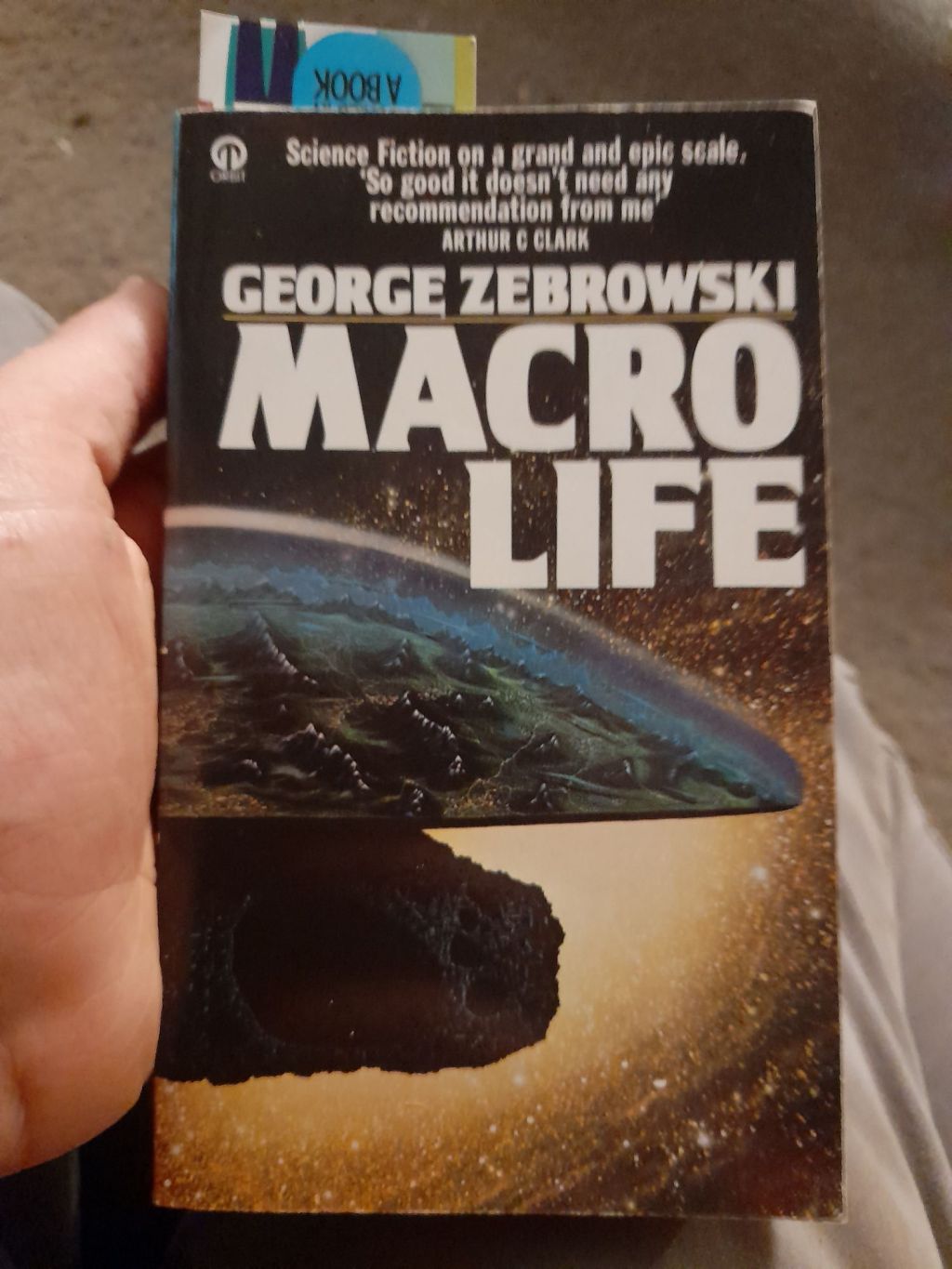
Macrolife, by George Zebrowski
It took me a while to get there, but I finally found an interesting book to talk about. Macrolife is a superb piece of hard SF, something of a halfway point between Olaf Stapledon and Stephen Baxter. It’s divided into three parts, the first of which is pretty rough going. Zebrowski takes the idea of generation ships and takes it to the logical next level? What if there was no destination, but a never-ending journey? The second act takes a hard look at the issues that might arise when nomadic star-faring cultures encounter sedentary ones, and the final part pushes the story of humanity to the very limits. The biggest issue I have with this book is the font size, which is ludicrously small even by the standards of mass market paperbacks, but that’s hardly the fault of the story, so I’ll give it a pass. One thing I would like to note is that Zebrowski shortly before I read Macrolife, but I can safely say he’s left an impressive legacy in the science fiction canon.


 At Boundary's Edge