Recently, when I’ve been at a loss for what to read next, I’ve found myself reaching for the nearest Star Trek novel. As of today, I have cleared my TBR of Star Trek, and have either read or listened to a staggering two-hundred and three Trek books. Today I’m going to quickly run through the most recent six novels. Though they come from a variety of series and authors, they all take place somewhen between the end of The Original Series and the start of The Next Generation, as such, they are largely focused on characters and events that were rarely seen or referenced on screen. Fleshing out the universe like this is exactly what tie-in books should do, so let’s see how successful these books have been.
New Earth #6: Challenger, by Diane Carey
The end of the New Earth miniseries was also an attempt to launch a spin-off called Challenger. As such, there’s a lot of character-introducing to be done, while also rounding off the major plot arcs of New Earth. This is a bit of a disjoined novel as a result, and can’t help but feel like a poorly-maintained bridge between wo series. Nevertheless, Carey is one of the early superstars of Trek tie-ins, and the book is never less than entertaining.
Gateways #2: Chainmail, by Diane Carey
The second book about the Challenger crew was also the last, leaving a sense of squandered opportunity. Though it comes under the Gateways banner, Chainmail is another standalone, but ends on a massive cliffhanger. I plan to get around to the rest of the Gateways series at some point, but on the basis of the aborted Challenger series, it won’t be a priority.
Unspoken Truth, by Margaret Wander Bonano
The TOS Movie era is my weak spot as a Trek nerd. They’ve just never really appealed to me. An entire novel about Saavik? Very low down the list of books I was excited for. That being said, it is a fascinating character study, and offers an interesting new angle on Vulcans and Romulans. Bonano is an underappreciated author, and this little oddity of a book shows off her craft.
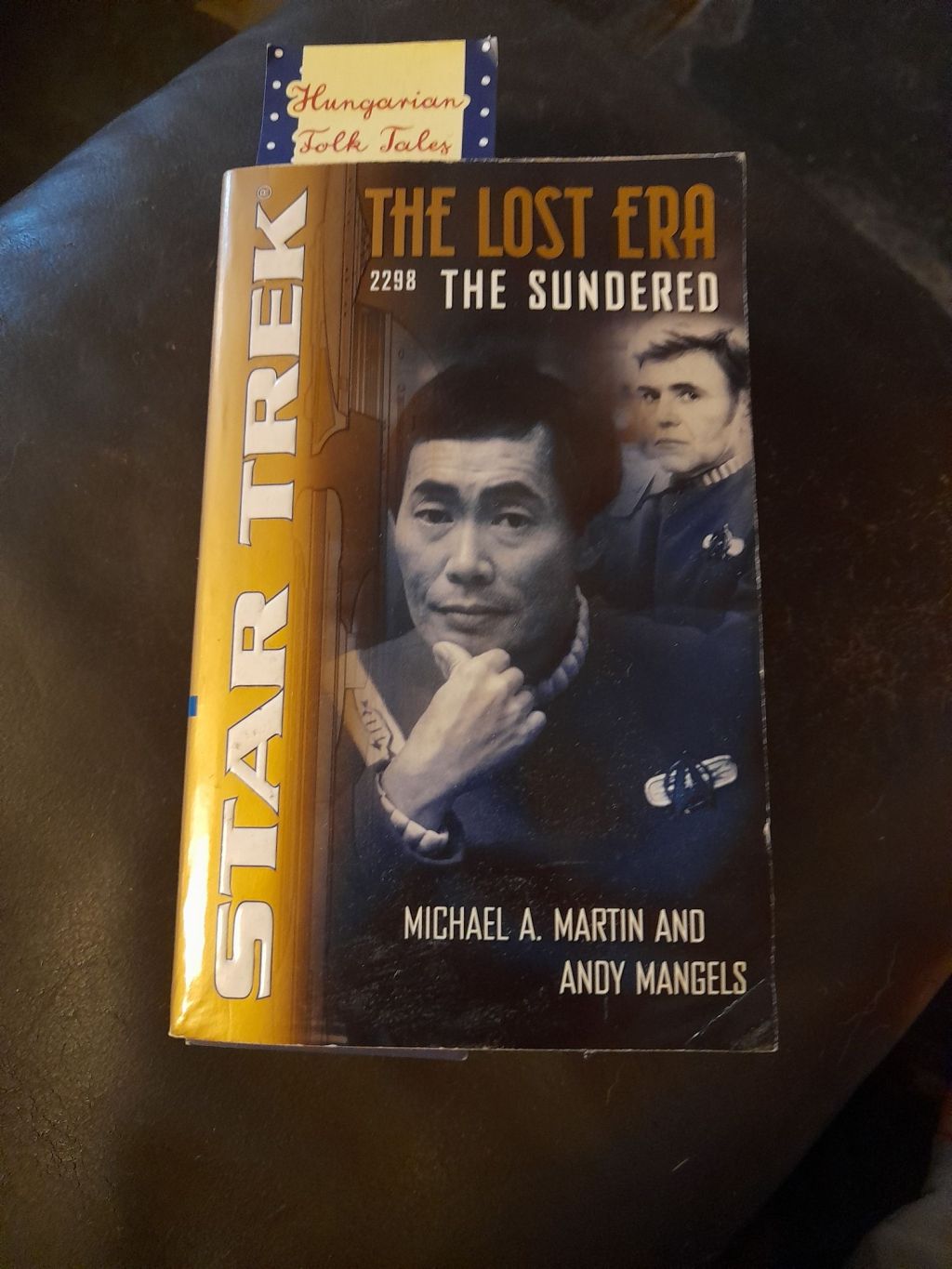
The Lost Era: The Sundered, by Michael A. Martin & Andy Mangels
Capatin Sulu and the USS Excelsior is infamously the spin-off we never got, and this rare novel featuring said vessel is a testament to what could have been. The actual plot of a lost branch of humanity causing problems at the end of the twenty-third century isn’t all that interesting, but Sulu and his crew shine through, and it’s a crying shame that we never got more adventures featuring them. As an added bonus, there’s plenty of Tholians, who are one of Star Trek’s most overlooked alien empires.
The Lost Era: The Art of the Impossible, by Keith R.A. DeCandido
Perhaps the most expansive of the Lost Era novels, DeCandido’s offering gives us nothing less than the twisted history between the Klingons, Cardassians, and Romulans. Quite frankly, there’s a little too much packed into such a short book, and this could easily have been a two-part series, but even if it is a little overstuffed, everything we do get here works. It’s a brilliant prelude to the political work seen in Deep space Nine, and offers a fascinating window into the inner workings of the three alien empires. Curzon Dax also lives up to his outsized reputation for shenanigans, while the copious references to other novels of the Litverse make this one of the most complex Star Trek novels out there.
The Lost Era: Deny Thy Father, by Jeff Mariotte
When I saw that this book was about William Riker and his father Kyle, my expectations plummeted. Every other interaction I’ve seen between the two of them has left me cold. Imagine my surprise when this turned out to be the best book of the Lost Era. Mariotte doesn’t waste time rehashing old arguments between the two. Instead, he shows each at a pivotal time in their life, but they barely interact during the course of the novel. Kyle’s side of the story is a tense conspiracy thriller, but even stronger was Will’s Starfleet career getting off the ground. If the upcoming Starfleet Academy series can capture even a fraction of the joy this book brought me, it’ll be a wondrous thing indeed. This is easily the most interesting I’ve ever found Riker, and is a fascinating foundation for the character we’ll see come to play such an important role on both screen and page as the years go on.


