Teaser
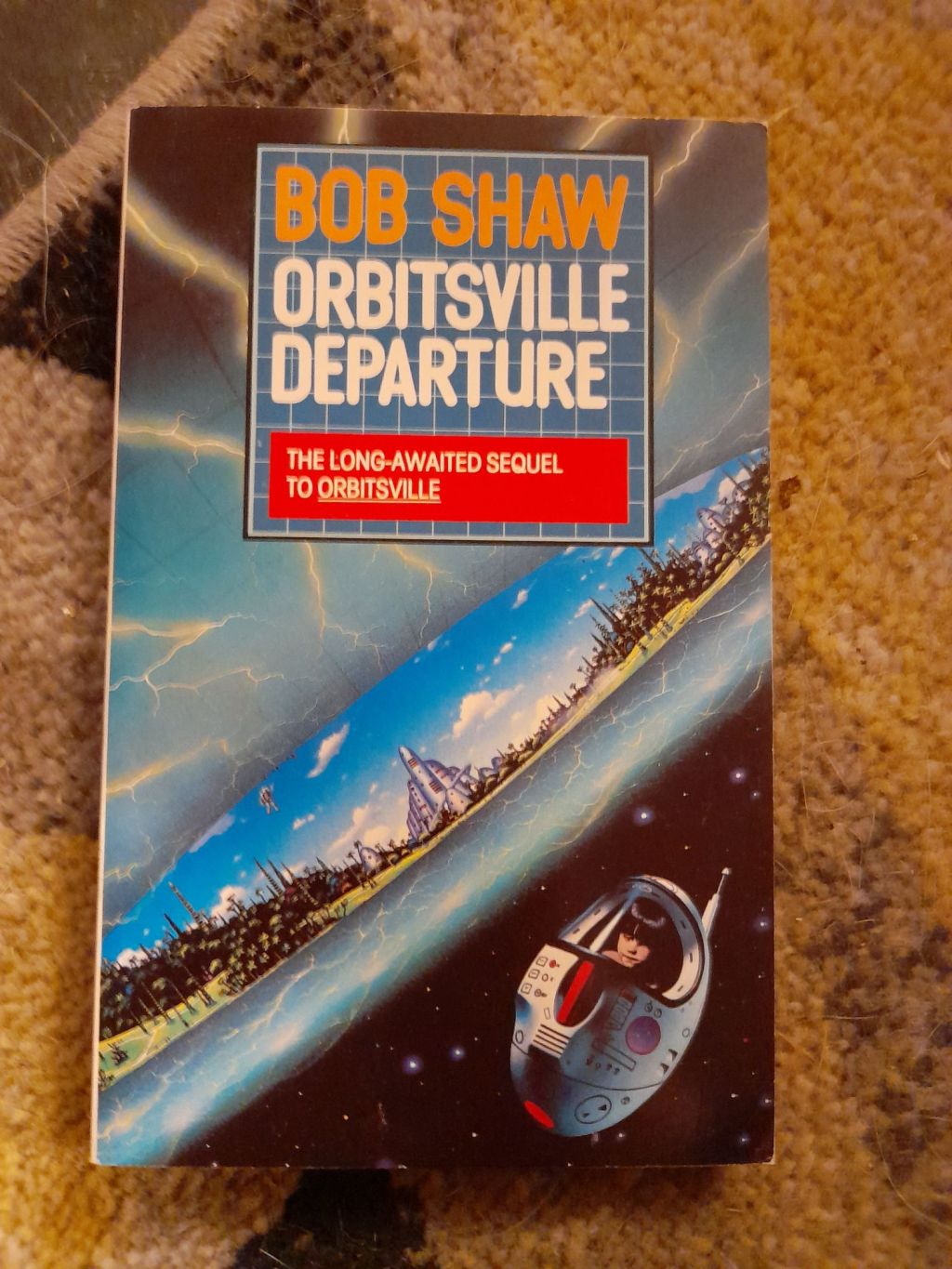
In the centuries since its discovery, the Orbitsville megastructure has drawn the interest of everyone on Earth. Many have answered its siren song. Settlers, scientists, criminals, and those seeking justice . . .
Review
Bob Shaw’s original Orbitsville was a truly phenomenal novel, all the more so when you consider its near-total lack of plot. In that book, readers were introduced to Orbitsville, a massive spherical space station encasing a star (aka my favourite megastructure: the Dyson sphere. There was a suggestion towards the end that it had been built to lure in other civilisations, to offer plenty of space for everyone so that they wouldn’t expand their own colonial efforts too far. There was also a man on the run and an epic trek across the vast interior of the structure, but that was mostly a means for Shaw to describe his creation. It was, in short, a perfectly executed idea-driven piece of science fiction, and I adored it.
And then Shaw decided to return to Orbitsville. I get it, sequels are commercially popular, and any good idea can hold up to some more poking. The question I had was if Shaw would push his idea of Orbitsville even further, or if he would use the setting as a sandbox for a more narrative story. The answer, somewhat predictably, is that he did a little of both.
Expanding on a great idea is always tricky, especially when the original idea was so well executed. Now we get to see more of Orbitsville, and how human society has changed along with its discovery. One aspect I particularly enjoyed was the idea of a city where each street is themed after a particular decade, complete with holographic crowds simulating the people of the period in a sort of living history display. Towards the end of the book we also get some solid answers about the creators of Orbitsville and its purpose. These are huge ideas, and while they raise as many questions as they answer, they are also clearly a setup for the third book in the trilogy, so the ending does feel slightly rushed.
Then there’s the human element to the story, and that’s where things fall apart. Yes, the idea of completely destroying someone’s memory and personality being considered murder raises some fascinating ethical and legal quandaries, but as with a certain accident in Orbitsville, this trauma is quickly skipped over. Instead we get some chance sequences, some suicide attempts, and a whole of lot of questing for vengeance. Without the novelty of uncovering Orbitsville for the first time to support it, this story falls utterly flat for me, and I think it’s safe to say that character work is not Shaw’s strong suit. It’s serviceable, I’ll give it that, but nothing more.
All this combines to make a novel that feels like a considerable step down in quality after Orbitsville. The third book sounds like it has some promise, but as a bridge between the other two volumes, Orbitsville Departure leaves a lot to be desired. The shine of Orbitsville has faded for me just as much as for the characters, and while the original novel was close to a must-read for mega-structure enthusiasts, this follow-up is a fun adventure, and has some good ideas, but ultimately it’s rather forgettable.
Book Stats
- Orbitsville #2
- First Published 1983
- 192 Pages

 At Boundary's Edge