The bad news: I’m strapped for time and can’t focus right now (All is well, just life being life and lambs being lambs.) The good news is that you’re still getting a review today. It’s just going to be a little rougher around the edges than usual.
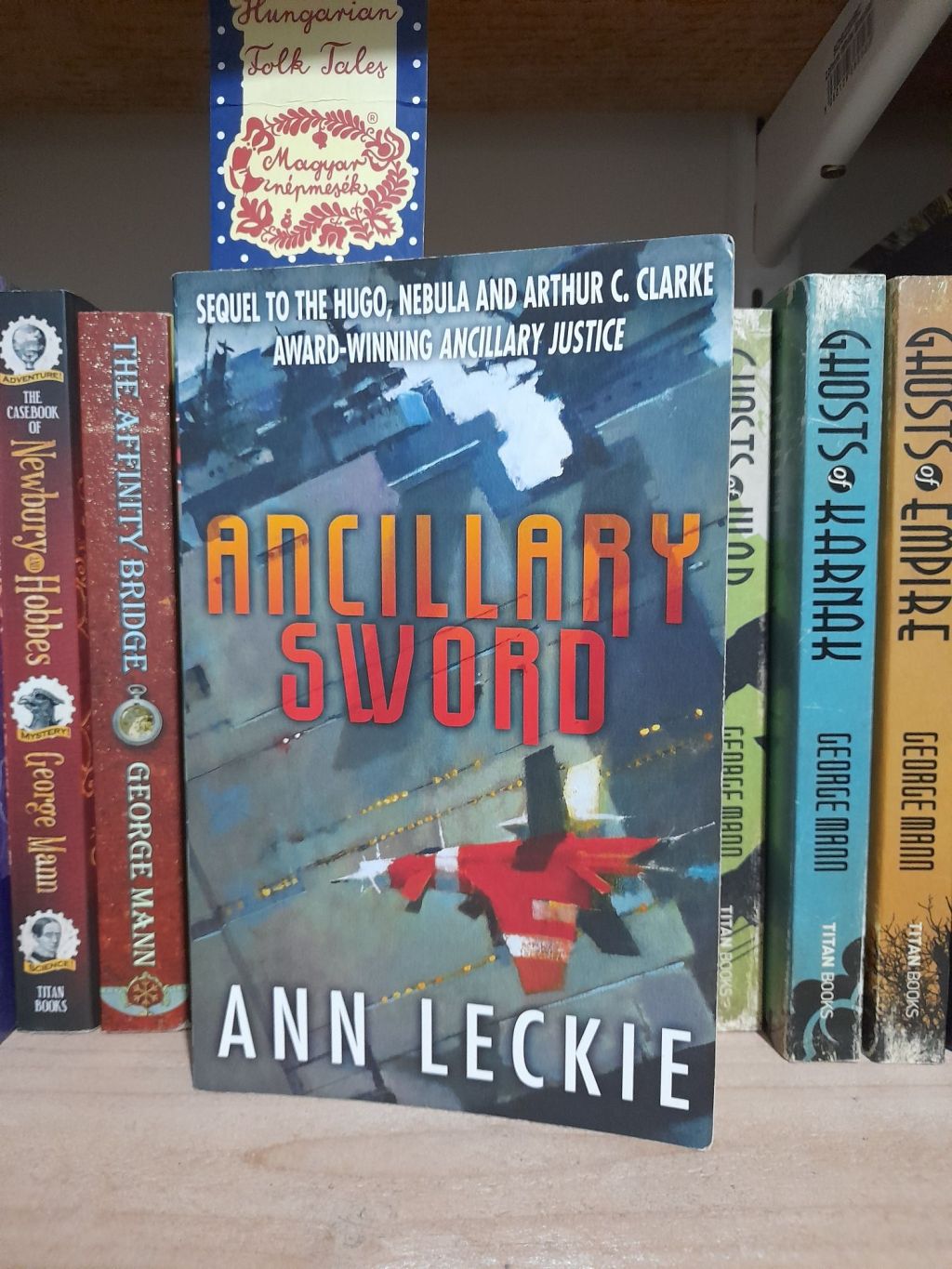
Ancillary Justice was one of those books that sweeps the major SF awards, is championed as something new and bold, and then sticks around. That last part is key. Sometimes debuts sparkle only for careers to fizzle. sometimes that book we’re all raving about one day is practically forgotten the day after. Part of Ancillary Justice‘s success was having a completed trilogy within three years. Ancillary Sword is the middle book of that trilogy, and also an award winner, albeit not quite on the same scale.
It’s hard to live up to your predecessors when they’ve achieved so much. Yet with Leckie still writing novels set in the Radchaii universe, that foundational trilogy is still alive and kicking. As I started Ancillary Sword, I had one major question. Could it match up to the first, or would it settle down?
The answer, as is so often the case, is a bit from column a and a bit from column b. If I had read this right off the back of Ancillary Justice, I might have had an easier time of it. But I didn’t, so I didn’t. After a year away from the Imperial Radch, I had to relearn all the rules. That’s a problem you face a lot when you read series with large gaps between books. It’s a problem worsened by the staggering ambition and complexity of Leckie’s work. Truth be told, I have forgotten most of the plot to Ancillary Justice. That’s fine, because Ancillary Sword is mostly its own story. However, refamiliarising myself with the nature of the Radch took a while longer. Within a few chapters I was drowning in a sea of uncertain genders, highly ritualised society, and profound questions of identity and loyalty. By the time I got the hang of things, I was already approaching the end of the book.
At the same time, Ancillary Sword doesn’t add much to the conversation. Strip away those added layers, and you have a fairly standard space opera-slash-murder mystery. Luckily, it’s a good one. It’s tightly paced, and once things settle into place there’s a fascinating setting to explore. Make no mistake, most of the failings from this reading experience stem from me instead of the book.
Ancillary Mercy lurks in the murky unknown future, and I’m pretty sure I’ll buy a copy when I see it. If I do, I won’t leave it on the TBR for so long before cracking open the pages. If this muddled mess of a review makes the Imperial Radch series sound interesting, then do yourself a favour. Learn from my mistakes. Read them close together. You won’t regret it.

 At Boundary's Edge