Teaser
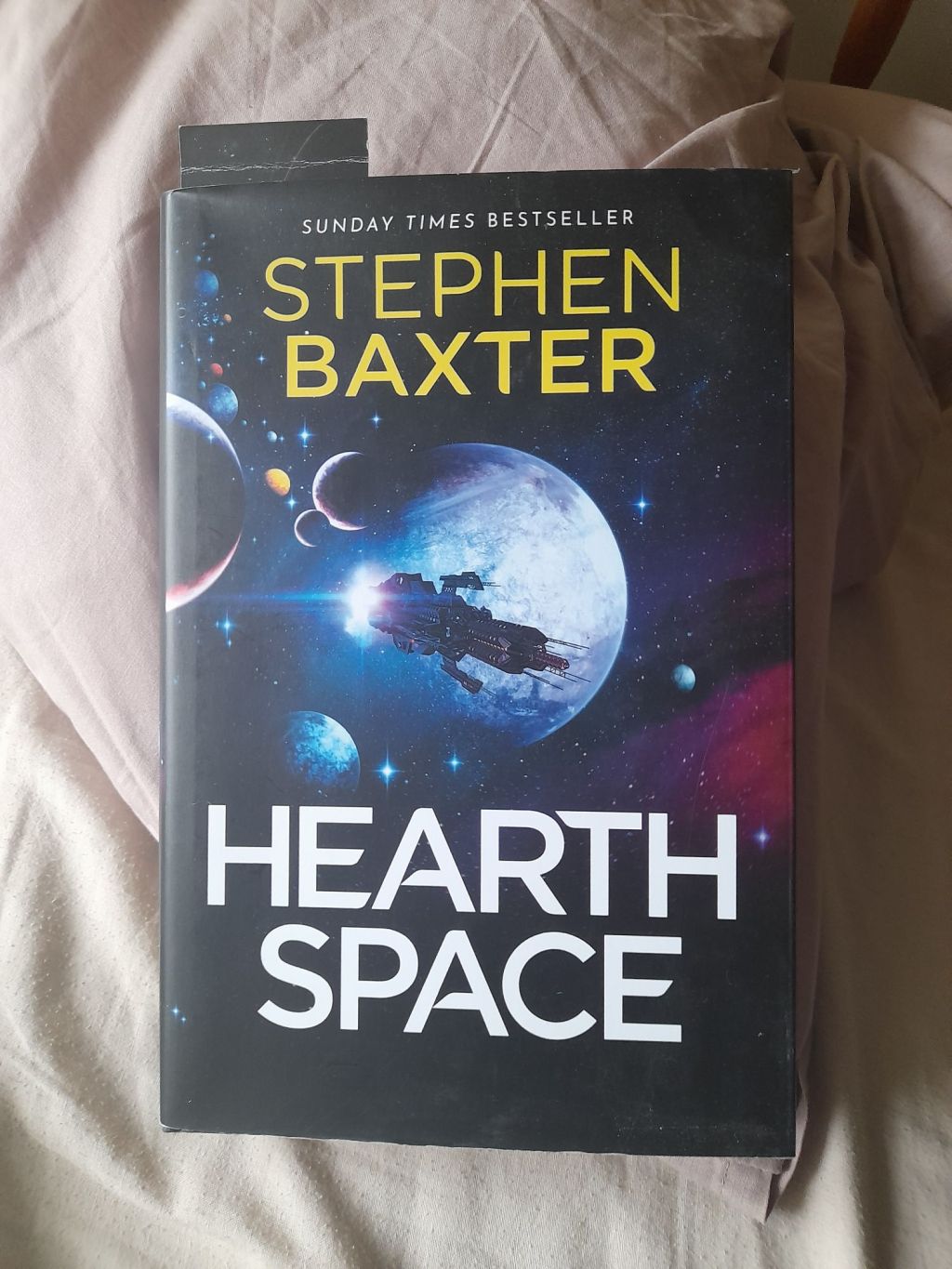
The Hearthspace is home to thousands of worlds. Many are gathered under the banner of the Alliance, while others fall under the control of the Hierarchy. When these two civilisations meet, the results will be cataclysmic . . .
Review
When reviewing books, it’s very easy to start talking about tropes. Those recurring motifs that appear so frequently in storytelling that we’re all familiar with them. Sometimes it’s about tropes we like (ask me about my hit take on found family, I dare you) but a lot of the time it’s about tropes we’ve seen way too much of, or that we just don’t enjoy. If there’s one trope that usually leads me to either sighs of exasperation or tears of boredom, it’s imprisonment narratives. I don’t mind characters getting locked up. I have no moral objection to it. But when a character is in prison against their will, there are basically two things guaranteed to happen. First, the character is going to go through some misery. Second, they will escape. And they basically have to escape, because if all you’re doing is sitting in a prison cell, the story grinds to a halt while the authors comes up with delightful new ways to torture their beloved protagonist. even the best authors are prone to this failing. Let’s just say there’s a reason that Kingdom’s of Death is my least favourite book in Christopher Ruocchio’s Sun Eater series. So when I started reading Hearthspace and the protagonist was captured by the enemy within a few pages, I did sigh. Just a little. But I trust Stephen Baxter, and I kept reading.
Narratively, this is a book in which the main character is held hostage for most of the story. However, as a valued hostage, she is allowed a teensy little bit of freedom. So we get to see more than just four walls, a floor and a roof. Although we do spent pretty much the entire book on a slave ship. It’s odd, because Baxter has created a wonderfully unique setting, but we mostly explore the Hearthspace through dialogue Sometimes that dialogue is even a little repetitive, but that classic Baxterian love of science is on full display. I love standalones, but in this case, I would definitely not be averse to a sequel somewhere along the line, because the Hearthspace is ripe for further exploration.
Back on the ship, however, things get dark. I know some people who call the Xeelee novels grimdark. I think they’re wrong. It’s not nihilistic to acknowledge that the laws of physics make the future a dim prospect at times. Hearthspace is different. It is a book filled with people being horrible to one another. the scenes in the slave pit are unrelentingly bleak. But I don’t think it’s grimdark. It is grim. And it is dark. But Baxter isn’t revelling in the grime as many other, and I would say lesser, authors might. He acknowledges the darker side of humanity. He doesn’t flinch, and he doesn’t look away. But he doesn’t dwell on it. This is not a book about horrible things. It’s a book about how we survive them. About how we move on from them. If I were the sort to make up labels willy-nilly, I’d be tempted to call this post-Grimdark.
The great joy of a Stephen Baxter novel is letting him take you on a tour of his imagination. In the finest Wellsian traditions, that is what Hearthspace has to offer. As such, it’s hard to talk about in any real detail without giving the game away. Just let Baxter be your guide. Let him take you by the hand, and I’m sure you won’t regret it.
Book Stats
- A Standalone Novel
- Published 2025
- 366 Pages


 At Boundary's Edge