Star Trek: Picard ran for three seasons, and each one of those offered viewers something radically different. Season One was a sombre meditation of failure, death, and regret that pushed the Trek universe into some uncomfortable places. Season Two was an incredibly messy trip into other universes and timelines that made for some interesting television, but lacked a what of what most people expect from Star Trek. Season Three effectively forgot about everything that had gone before and was a fun but thematically flat reunion show for the cast of The Next Generation. Since each season was heavily serialised, there was little room left for additional storytelling in novels and other mediums. The first three novels based on the show were all prequels, because that was the only safe space left to expand into.
Of those three, The Last Best Hope by Una McCormack is the most closely tied to the show itself. It’s not just a backstory guide for the characters, it’s a book that lays the groundwork for the show’s first season. As such, it has a lot of heavy lifting to do. the bulk of the novel concerns Admiral Picard’s mission to evacuate the Romulan Star Empire before a supernova kills billions. From the show, we know that this mission ends in failure, with Picard walking away from Starfleet, giving the book a sense of foreboding. Running alongside this we have Maddox and Jurati’s efforts to create new synthetic life. This also ends badly for all involved. So yes, it’s a heavy novel in which Trek’s typical optimism is largely absent as everything falls apart.
Despite having so much ground to cover, McCormack does an excellent job of tying together all of the threads. Plot-wise, it’s largely a job of making sure everything is in place, but it’s with the characters that McCormack really shines. Picard’s voice is spot-on, and we also get to see his first encounters with Raffi and Elnor.
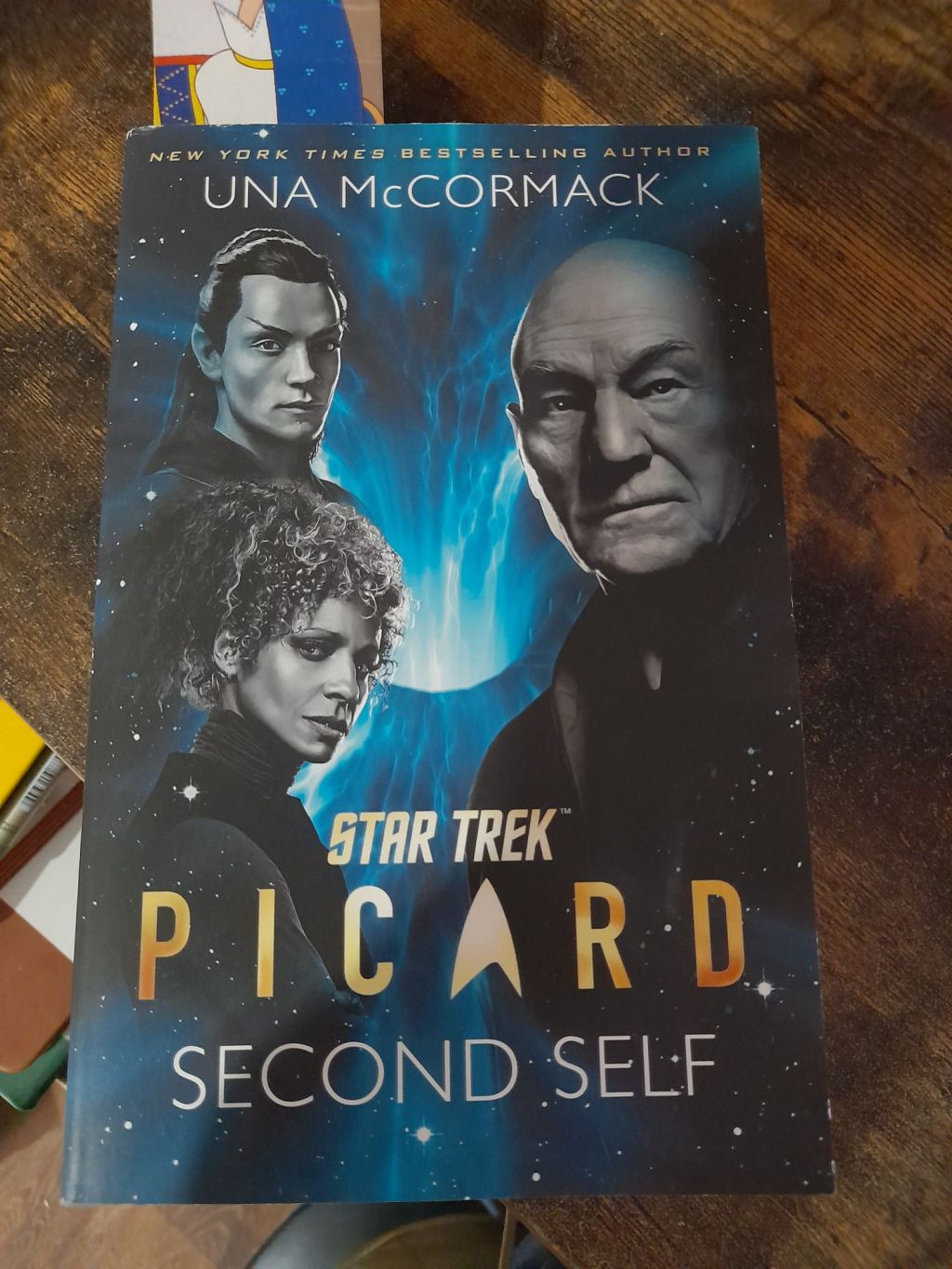
It’s the pairing of Raffi and Elnor who continue their dynamic into Second Self, McCormack’s second Picard novel, which takes place between seasons one and two of the show. Here we see Raffi and Elnor embark on a mission for Starfleet intelligence to apprehend a Cardassian war criminal. Now, that criminal’s identity doesn’t appear in the marketing, but since it’s clear from very early on in the novel, I’ll name him. Elim Garak is back.
Now, I have to admit that I have issues with Second Self. It takes place across five acts, three of which are decades before the main story of Picard. A lot of it provides excellent backstory for Raffi, while the middle act is pure Garak. things do get woven together by Bajoran mysticism, which I am rarely a fan of, but by and large it works as an epilogue for Garak’s character arc across Deep Space Nine and the Dominion War storyline.
What I think is more interesting the way the book highlights a road not taken. As I said earlier, Picard‘s second season takes place in another timeline, and seemed to exist largely to get rid of the main cast (except Raffi) so that the budget would stretch to the big reunion show that Season Three was doomed to be. I’m not a huge fan of either season, though both have their highlights. and while Second Self is as much about Garak as anyone else, it still features more of Elnor than the last two seasons. Even Rios gets plenty to do as captain of the Stargazer, remaining in orbit to offer support to the Intelligence officers on the ground. Frankly, it’s a crying shame that all these fascinating characters were swept aside in the name of fan service for the show’s final outing. Second Self, though flawed, offers a much more interesting angle that the show did not take.
Last month saw the release of another Picard novel, Dayton Ward’s To Defy Fate, set after the events of Season Three. I’m keeping my fingers crossed that Elnor will reappear in that one, just as I’m still hoping for some sense of cosmic justice to offer up a novel for Soji and the synth storyline. But if more Picard novels can keep up the quality of what we have here, then I’ll be a happy man indeed.


