Teaser
In the aftermath of a devastating battle, a small band of humans seek refuge on Genellan. This remote paradise will soon become a flashpoint in a war that will determine the fates o four species . . .
Review
Going back to the books you read when you were young is always fraught with risk. Will the magic still be there after all these years? Or will the allure have faded. And when a book sets you on a lifelong journey, can it possibly live up to the idealised version you remember? Yet at the same time, there is immense value in rereading a book decades later. The words on the page are not the only part of the story. Of equal importance are the assumptions and worldview that we as readers bring to the book.
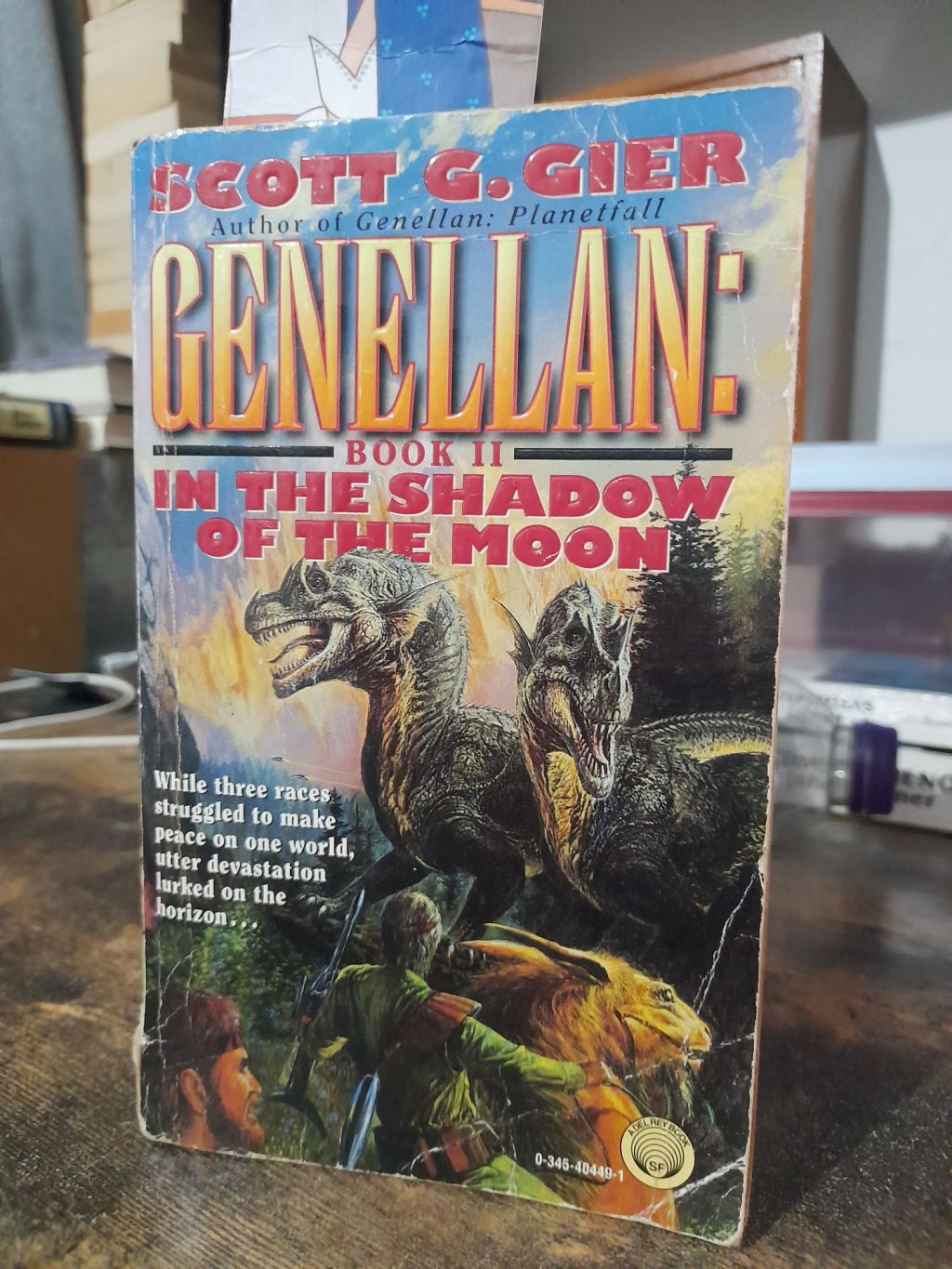
Scott G. Gier’s Genellan novels are one of the foundational texts of my SF experience. I read the second volume first, finding it in a now long-defunct bookshop when I was only twelve. It was bigger than the Wells and Asimov I had read beforehand, and held all the appeal of those fat mass market Star Wars novels I was tearing through whenever I got the chance. A few years later I tracked down the first and third volumes, but never saw any more. It turns out that the fourth volume was self published digitally a decade after the third, and a potential fifth volume will likely never see the light of day due to Gier’s declining health.
But those three books I do have? They are still magnificent. The memories came back, of alien fleets screaming their way into the universe, and of the Konish civil war raging even as humans and cliff-dwellers fought against a severe winter. More than that, however, I saw the books through a whole new lens. The complexities of interstellar politics unfolded to me the way a child could not have understood. The true horror of the Ulaggi camps became clear. The all pervasive sense of humanity traumatised by repeated bloody first contacts. It hits harder when you understand what you’re reading.
Certainly, there are elements to be criticised. The pairing off of the survivors into romances is a little too neat, the Konish villains are short only of moustaches to twirl, and the cliff-dwellers speak in far more thees and thous than I remembered. Yet these failings are only the slightest of blemishes on a remarkably sturdy piece of militaristic space opera. So what if it’s a blunt weapon? It’s a gripping tale nevertheless. The brewing rivalry between Bucchari and a’Yerg is as compelling as any other I can think of. And even after thirty years, these books hold up to modern reading. I dare say they hold up better than many of their contemporaries.
There are plenty of space operas and military SF dramas out there that handle action and adventure with equal aplomb to Gier, but there are few who can match his tenderness and eye for detail when it comes to developing alien cultures. The cliff-dwellers feel like a real society, with all the internal conflicts and social issues you could ask for. The kones are more traditionally alien, but never feel like humans in suits – a role they could easily have been cast in. As for the Ulaggi, I dare say they are one of the most sickeningly inhuman creations of their decade.
There are plenty of readers who will not touch a series until it is finished. Genellan: First Victory ends on a cliff-hanger that I will likely never see resolved, and even those who can read digital books will likely never see any true resolution to the series. But whether you read one, two, three, four, or some day more of Gier’s books, the Genellan series stands as proof that something doesn’t have to be finished in order to be good. Eighteen years have passed since my first exposure to the series, and it’s every bit as wonderful as I remembered.
Series Stats
- Books #1-3: Planetfall, In the Shadow of the Moon, First Victory
- Published 1995-1997


