Teaser
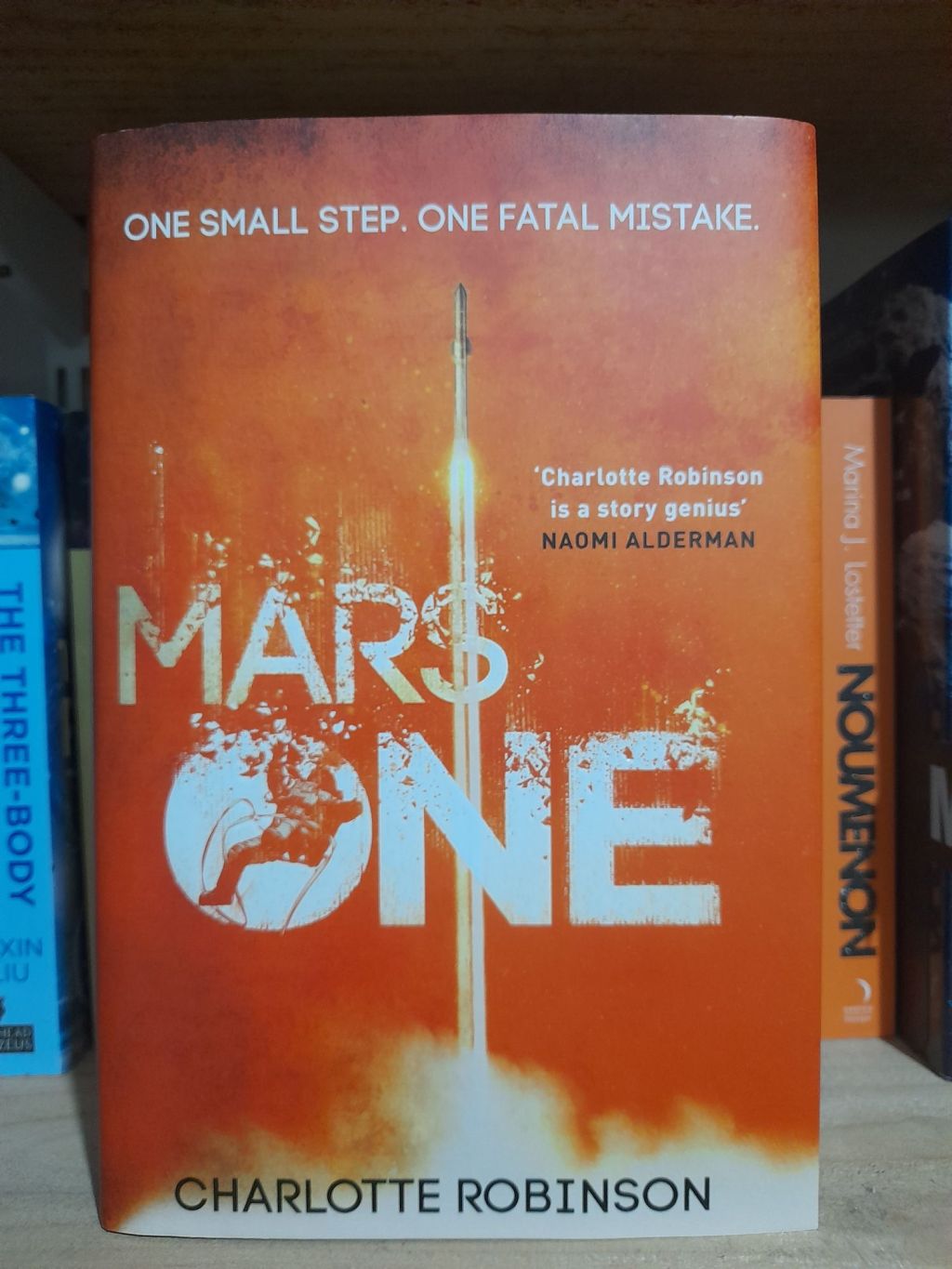
Four years after the last Mars mission ended in disaster, a privately-funded team aim to be the first to step foot on the Red Planet. The Crew of Mars One know that they’re on a one-way trip, and they know that their every move is being filmed. What they don’t know is that there is a traitor on board . . .
Review
As a general rule of thumb, I don’t believe in beginner-level science fiction. If someone has never read a science fiction book before, my recommendation on where to start is going to vary massively depending on the person in question. That being said, some books are more accessible than others to a non-SF audience. There is a reason that authors like Pierce Brown and Andy Weir are everywhere in online book conversations. Brown is a natural stepping stone for someone moving from YA dystopias into adult SF, while Weir has a knack for delivering scientific detail in an exciting manner. The fact that Weir’s books have been adapted with great success to the big screen is testament to the fact that people want to see accessible stories set in space.
That’s where Charlotte Robinson comes in. She has an extensive background in on-screen storytelling, and her debut novel Mars One is a great way to get fans of thrillers, modern day cyber-crime, and espionage dramas into science fiction. Beyond the fact that much of it takes place on a spaceship halfway to Mars, there’s little in the story that couldn’t take place in the present day. At least, a present day in which various space programmes get their act together. There’s no tricky new concepts or mindboggling technology here that is going to deter an SF newbie from picking up the book.
The other great strength of Mars One in terms of readability is also it’s biggest fault as a novel. It might just be a side-effect of Robinson’s background, but I have never read a book that felt so strongly as if it wanted to be a film instead. Or perhaps a TV show, since there is a lengthy section of refugee ships and international piracy that feels very much like an episode inserted to bulk out a show’s episode count. Now, there’s nothing wrong with films. I enjoy films, but when I put Mars One in the same category as Independence Day or Armageddon, know that I wouldn’t choose to read book versions of those stories. Mars One hits every trope possible. Every mother is either dead or dying, fathers are absent, either physically or emotionally, until the time of direst need. Characters deliver lengthy monologues about their motivations and inner turmoil, and fall in love at the drop of a hat with no sense of chemistry. There’s also a fair bit of coincidence powering the plot. Even the central conceit of having the crew filmed for public broadcast at all hours doesn’t work on the page anywhere near as well as it would on the screen. If there isn’t an adaptation announced soon, I’ll be very surprised.
Mars One gets away with this by being likeable. Naturally, I’m the kind of nerd who loves details, but Robinson skims past them and straight to the optimism of spaceflight. There’s an indomitability to the human spirit that shows even the unlikeliest of people might have the right stuff after all. The characters might be clichés, but their clichés that work. The identity of the traitor had me guessing until the very end, in part because their motivation was nonsensical, but also because Robinson does a brilliant job of pointing the blame at other parties. I also think it’s an interesting (and dare I say brave?) choice for a book published in 2026 to have sympathetic billionaires and villainous eco-warriors. We can debate the morality of those narrative choices, but they certainly go against the grain in a way that keeps things fresh. And while the public broadcasting aspect doesn’t work in execution, the motivation behind it is worryingly plausible.
There are a lot of character choices that don’t make sense towards the finale, and I think any final judgement will have to wait until I know if we’re getting a sequel, because there is an almighty lack of resolution. What I can say for now is that this isn’t the sort of book that is going to tax your brain or make you re-evaluate your worldview. It’s a thriller that happens to be set in space, but it’s a good thriller. A flawed but fun adventure through a very possible future. If you want something light to read at the beach or on a long journey, then this is a quicker read than its page count suggests, and I highly recommend you take a look for yourself.
Book Stats
- A Standalone Novel
- Published 2026
- 563 Pages


