
Five years ago, I found a row of books in a charity shop in Worthing, all by Jack McDevitt. I’d never heard the name before, and grabbed the most interesting one. It was called Chindi, and I didn’t like it all that much. Oh well, I thought, these things happen. It was over a year later that I was given a copy of McDevitt’s A Talent for War. This book was much better on every level, and I was convinced to keep reading. Though McDevitt is hard to find in the UK, I hunted down copies in used bookshops (with a little help from two transatlantic trips). His Alex Benedict series secured him a place as one of my all-time favourite authors. I even backtracked and listened one of the books to which Chindi is a sequel. The Engines of God was fine, but nothing spectacular. I put it down to McDevitt having one series that was better than the other. Again, it happens. So when I found two more of his Academy novels in my local used bookshop, I promptly grabbed them, then let them sit on the TBR for a while.
This month I read both of them. Omega reminded me of the other books in the series. Competently told, but hardly awe-inspiring. It’s an interesting little novel about human scientists trying to protect a less technologically advanced species from impending doom without destroying their culture. Honestly, it could have been an episode of Star Trek, and a good one at that, but for whatever reason, it never clicked. I counted my suspicions about the quality of the series confirmed.
And then came Odyssey.
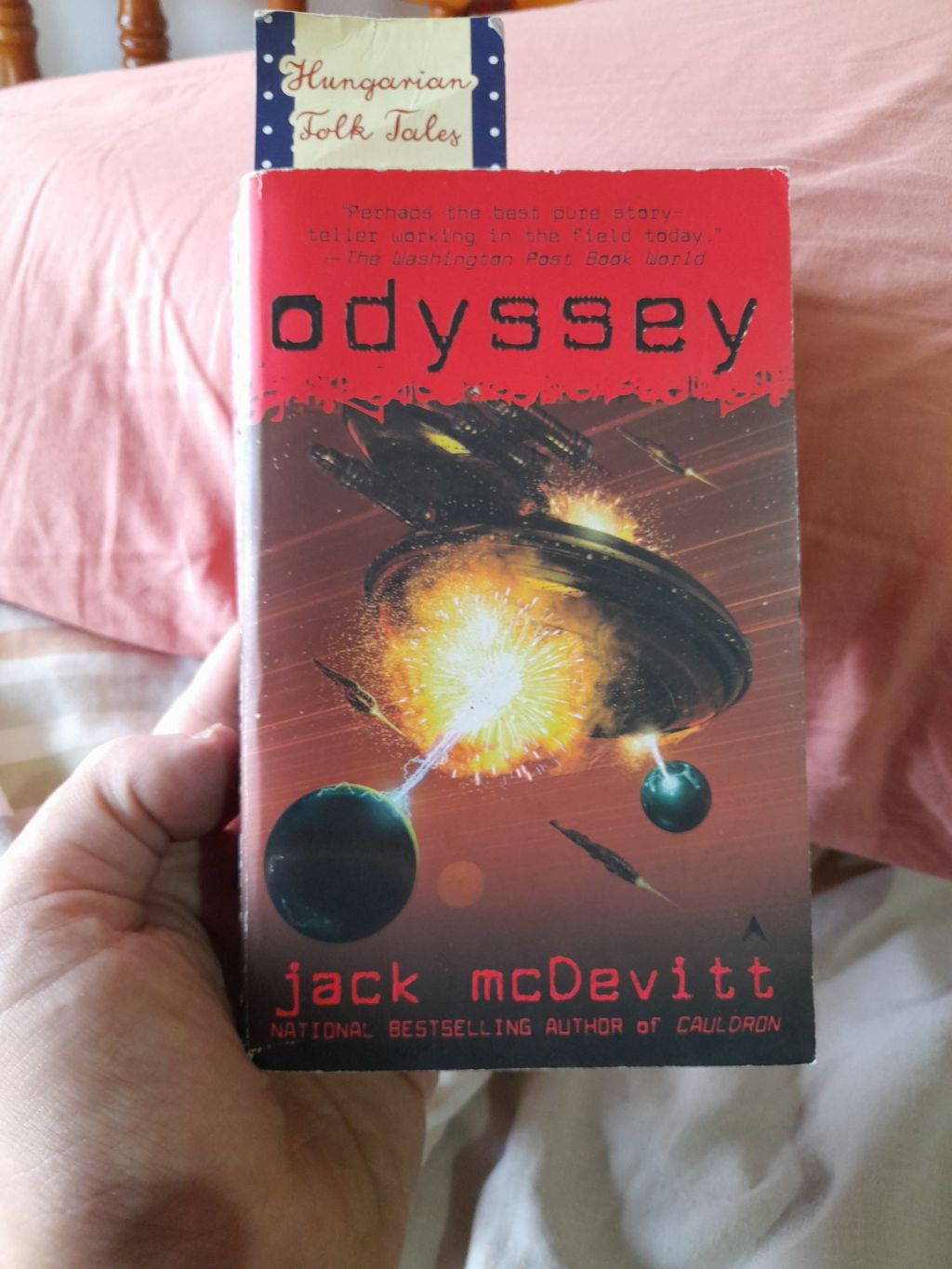
Odyssey is everything I hope for a Jack McDevitt book to be. It is thoughtful, it is engaging, it has more twists and puzzles than you could ask for, but somehow it all come together in the end. The overlap between Alex Benedict and the Academy series in terms of publication order is interesting, as by this time McDevitt was basically alternating between the two year on year, and I dare say that by the time Odyssey came out in 2006, the man had hit his stride. For those interested, McDevitt was seventy-one at the time, and only retired from writing in the past few years. There’s a tendency in online circles to champion the young, fresh new voices, so it’s easy to forget those who start out later, or those who bring the wisdom of their years and keep writing brilliant works of fiction over the course of decades.
What makes Odyssey work? Well, it does exactly what the best works of science fiction does. It takes what we know today and projects it into the future. Odyssey is set two centuries in the future, but the question it asks is an important one: In the face of existential threats of social disruption and global warming, should we be throwing money at space exploration? Even twenty years after publication, it remains a hot topic. Especially impressive is McDevitt’s foreseeing of the private space industry and all the complications it entails. How do state-organised groups and private companies compete and cooperate with one another? McDevitt doesn’t have all the answers, but he is asking all the right questions. As ever, McDevitt also avoids taking sides. I’m sure he has opinions, and if pushed I could probably guess at which side of the debate he favours, but even if I’m right, the opinions of the author are not writ large in the text. McDevitt has an even-handed approach to sensitive debates, with both sides making blunders, having valid points, and generally being treated with empathy and maturity. There are depressingly few authors who can pull that off.
Omega may have been a stumbling block, but Odyssey is by far the best Academy novel I’ve read so far, and certainly the equal of any Alex Benedict novel. If I haven’t convinced you to read McDevitt by now, then I don’t know what else to say. Just do it.
Omega
Odyssey

 At Boundary's Edge