Teaser
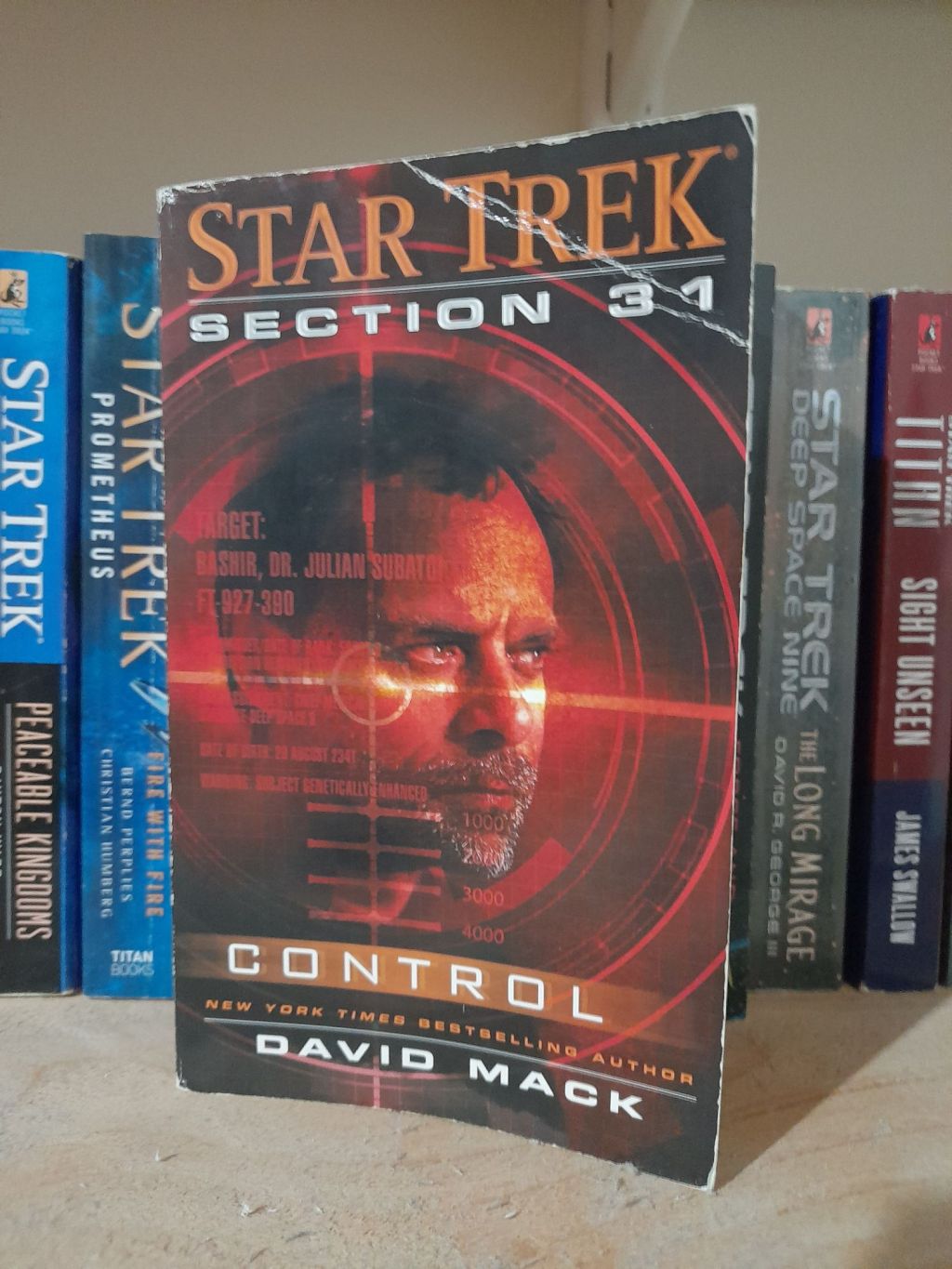
For two centuries, Section 31 has lurked in the shadows of the Federation. Acting without mercy, with regard for the law, they have assassinated and spied on enemies and allies alike, all in the name of preserving peace. But for Julian Bashir, the price of that peace is too high, and the time has come to drag Section 31 into the light . . .
Review
Section 31 was first introduced to Trek fans through Deep Space Nine, and probably seemed like a good idea at the time. A secret spy group with an unethical agenda that added a plausible amount of greyness to Trek’s largely positive future. It sounds interesting, right? However, every successive use of the group in Trek has been a matter of diminishing returns at best, and terrible execution at worst. Newer Star Trek incarnations have rebranded Section 31 as the official intelligence arm of the Federation, operating in the open, and culminating in the slightly disastrous Section 31 streaming movie. In the old Litverse, Section 31 was retroactively added to older series with surprisingly effective results. Cloak, in particular was effective mix of Section 31 and The Original Series. In the post-Nemesis timeline, we got to see Julian Bashir drawn deeper into Section 31’s conspiracies. Disavowed and Control mark the end of this particular version of the Section 31 storyline.
As an aside, while both David Mack’s novels and Discovery‘s second season feature an artificial intelligence called Control, I don’t know how much deliberate connection there is between the two, which released within a year of one another.
Disavowed is the first, and the weaker, of these two novels. As well as Section 31, it pulls on another thread that has been overused ad nauseum during Star Trek’s long history: The Mirror Universe. The Mirror Universe has been a fun way for actors to play evil versions of their charatcers, but any attempt to add depth or narrative to the evil universe has fallen flat on its face. Oddly, Disavowed also features a somewhat redeemed Mirror Universe, so we don’t get to see what an evil Picard would be like, though I’m sure Patrick Stewart would have acted the socks off such a part.
Thankfully, Control is a much better novel. Again, it pulls together a number of long-running threads, including the resurrected Data. Yes, I’m glad I read the Cold Equations trilogy earlier this month. It’s a novel that’s very much built on the two decades that have gone before, but beyond that, it’s a fantastic piece of spy fiction. Bashir has always had a thing for Bon (sans trademark), but this is where he really comes into his own. The action and set-pieces are flawlessly executed, the stakes feel real, and the villains are appropriately nasty. It does suffer a little from a Sherlockian ‘aha, you’re plan was just a part of my plan,’ but mostly gets away with it.
A pleasant surprise was to see Section 31’s origins in the twenty-second century, complete with a few cameos from Enterprise. If you’ve seen Person of Interest, then you’ll spot some similarities between Control and the Machine/Samaritan, which I think makes for a really interesting twinned take on the role of AI surveillance. Like Person of Interest, these flashback sequences are hauntingly prescient of where the world is in 2026.
Section 31 has never been my favourite part of Trek, through both its inception and its overuse. That being said, Mack’s finale is better than I had expected it to be. It also means that I’ve comepleted all of the major crossover series of the Litverse. With only a handful of DS9 and TNG novels still to track down, I’m wondering where to go next.
Book Stats
- Books #5 and #6 of Section 31
- Published in 2014 and 2017


