
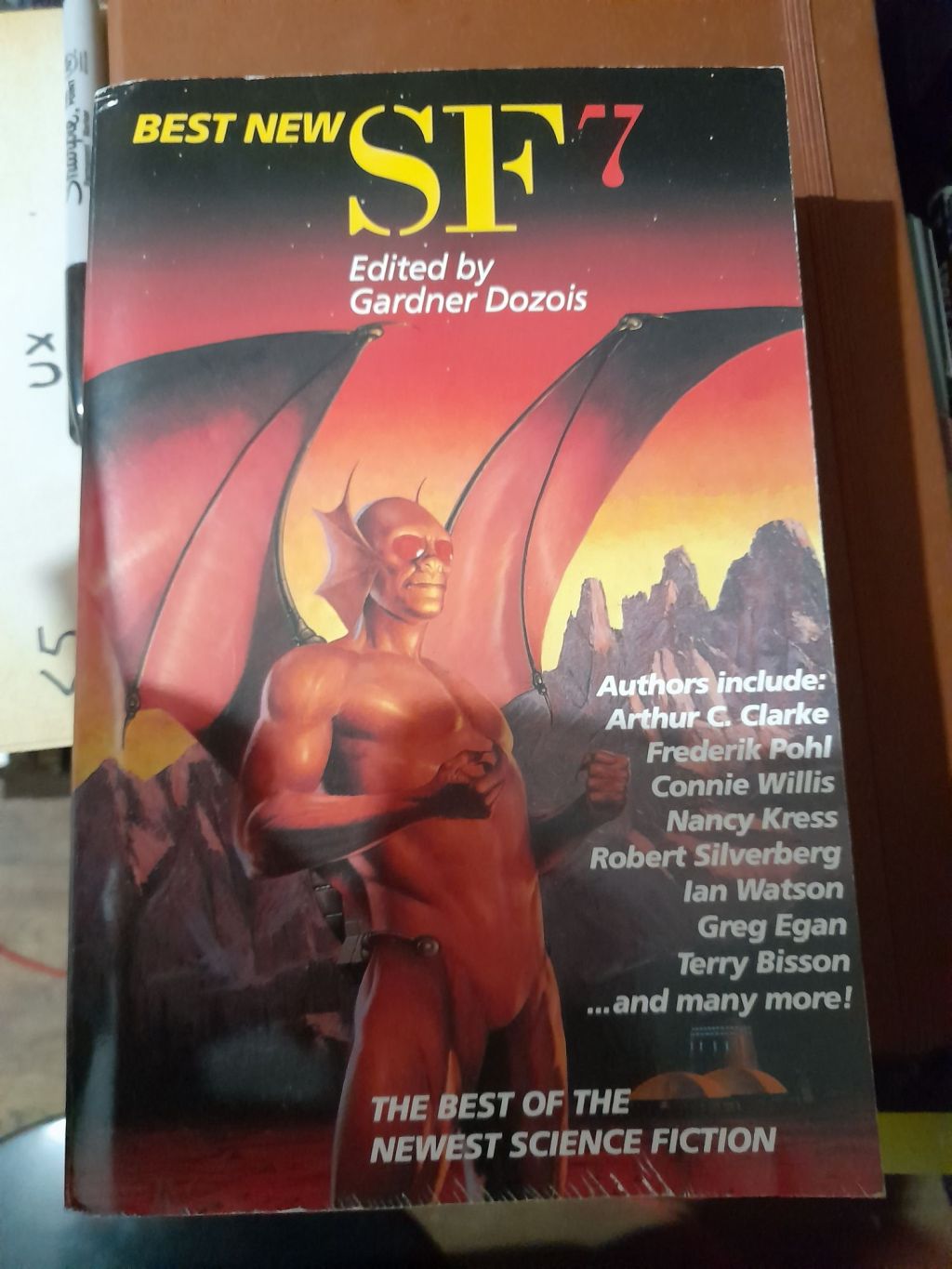
The late Gardner Dozois was one of the most famous (and most awarded) editors of anthologies in the science fiction field. He edited more anthologies than I have the time to list, but the most famous of them are his annual Best New SF series, which racked up an impressive thirty-five annual releases, alongside a few best of the best collections, and only came to an end when Dozois himself died. Each of these books covers a single year, and with Best New SF 7 being published in 1993, that means the stories inside first saw publication in 1992.
In his introduction, Dozois talks about 1992 being a somewhat dull year for the genre, while adding that sheer volume alone meant that there were plenty of stories worth reprinting in this anthology. I find myself largely in agreement with this sentiment. While I’m not intimately familiar with the short fiction from 1992, there were few novels from that year which stand out. Those that do are Mars, by Ben Bova (who is unmentioned in this anthology) and early works by Stephen Baxter and Greg Egan. Baxter is namechecked (though seeing him listed as a fresh new voice in the genre did give me a severe case of whiplash), and Egan has a story in the collection. That story is ‘Dust’ which I believe was later included in the novel Permutation City. ‘Dust’ is far and away the best story in Best New SF 7, and shows just what the incoming wave of hard SF writers were capable of. It’s also a timely reminder that I’ve been meaning to read more Egan.
Only two other stories in the collection really stand out. Joe Haldeman’s ‘Graves’ is a horror piece about a strange body found in the midst of the Vietnam War (Haldeman again writing what he knows) that packs a lot of great imagery into a handful of pages. Rather longer is ‘Grownups’ by Ian R. MacLeod, which is an incredibly disturbing coming of age story where adults are not what you expect them to be.
However, the rest of the anthology is rather forgettable. Obviously, hit and miss is the nature of anthologies, but there are far more misses than hits. Most of the misses aren’t even bad stories, they’re just ones that fail to spark anything within me. It may well be that this is the best that 1992 had to offer, but if so I’d hate to see the worst.
The stories are not the sole appeal of the book, however. As well as gathering the fiction, Dozois writes a lengthy summation of the year as a whole. Some of this is more detail than the average reader will need. Honestly, I don’t think including the billing addresses for so many short story magazines is particularly helpful. But looking at it three decades later, it’s a fascinating snapshot of where Dozois saw the genre. As well as short fiction, he talks about novels, including some good guesses about which books will be remembered in future years. His sideways glance at the state of SF on TV is astoundingly off the mark, causally writing off both Deep Space Nine for it’s lack of acting quality and declaring that Babylon 5 will likely be smothered by other shows.
On which note, given Dozois’ influence on the field, I was disappointed to read his snobbish attitude towards tie-in novels. Tie-in novels haven’t pushed regular SF off the bookshelves. Fantasy and Horror have accomplished that all by themselves. And so what if readers stick to franchises rather than branching out? Being art of a larger universe doesn’t worsen the quality of the stories being told. Dozois conveniently overlooks how many great SF writers have been part of the Star Trek story, from Harlan Ellison to Joe Haldeman. Thirty years on, and this is an attitude that we SF addicts are still stuck with.
Nevertheless, Best New SF 7 does provide a valuable look at the state of the genre in 1993, and even if it’s only for the summations, I know I’ll be looking for more books in the series.


