I started this blog in December of 2018, but had been considering it since soon after leaving university in May. As I was recently reminded, that was somehow eight years ago. Though I’d been involved in a forum or two and had been reading blogs for a long time, running At Boundary’s Edge was my first proper exposure to the online book community The face and shape of that community has changed a lot in those eight years, so I thought now was as good a time as any to take a look at those changes.
The Death of Forums
Okay, so technically forums aren’t dead. There are still some around. But the one I cut my teeth on (Fantasy Faction) is very much dead. The attached blog went through a rebrand, and the forum was swept aside. Some of the regulars created a new forum at Fantasy and Beyond, but it’s a much quieter place than Fantasy Faction in its heyday. A lot of forum-based activity changed to Facebook groups around the time I started this blog, but that has a much messier feel to it, with multiple posts a day about the same topics and no coherent organisation. In more recent years, Discord has emerged as the successor to forums. Discord is great for chatting and hosting readalongs (I happen to have the Boundary’s Edge Book Club for just such a purpose), but their attempt to copy the format of a forum is counterintuitive at best, and it’s much better employed as a chatroom.
The Decline of Blogs
Blogging as a whole seems to have slowed down. I haven’t found many people starting blogs in the past half a decade, though the existing community seems to be in fairly good health. The lack of new blood has, however, coupled with the closure or hiatus of several blogs I always considered big names in the field. Track of Words was a major inspiration for me but is effectively shut down these days. Future War Stories has disappeared from the internet entirely. It seems ironic to me that people looking to discuss books seem to have such aversion to doing so in a written medium. Which leads me nicely to my next segment.
Social Media
Now that Twitter/X/whatever you want to call it has imploded, the community is scattered between a dozen different social media upstarts. I use BlueSky, primarily to keep up-to-date with author news, and to share links to my reviews. Some recent choices by the UK government mean I can’t use the DM function there, which largely limits my ability to have proper conversations. The real winner in the social media wars has been Instagram, where there is a thriving bookish community. However, it comes at a cost. Instagram prioritises images (as you’d expect), which means people are encouraged to show pictures of books rather than actually talk about them.
Booktube
BookTube (YouTube that talks about books) was just starting to take off when I started blogging, and has taken over as a major player in the book review world. Given that I have a face for radio and a voice best suited for a mime artist, I’m not sad to have missed that boat. There are some great BookTubers out there talking about science fiction (SciFi Scavenger and Crowley’s Bookshop are two of my favourites for their in-depth discussions of the genre). However, a lot fall into familiar loops of Top 10 lists and Book Hauls (more on those later). BookTube remains one of the best places for longform interviews.
BookTok
In a damning indictment of readers’ attention spans, TikTok has become alarmingly popular with its short videos, to the extent that books are now advertised as being a ‘TikTok Sensation.’ I’m sure some of it is good, but I refuse to have anything to do with this platform.
Reading As Aesthetic
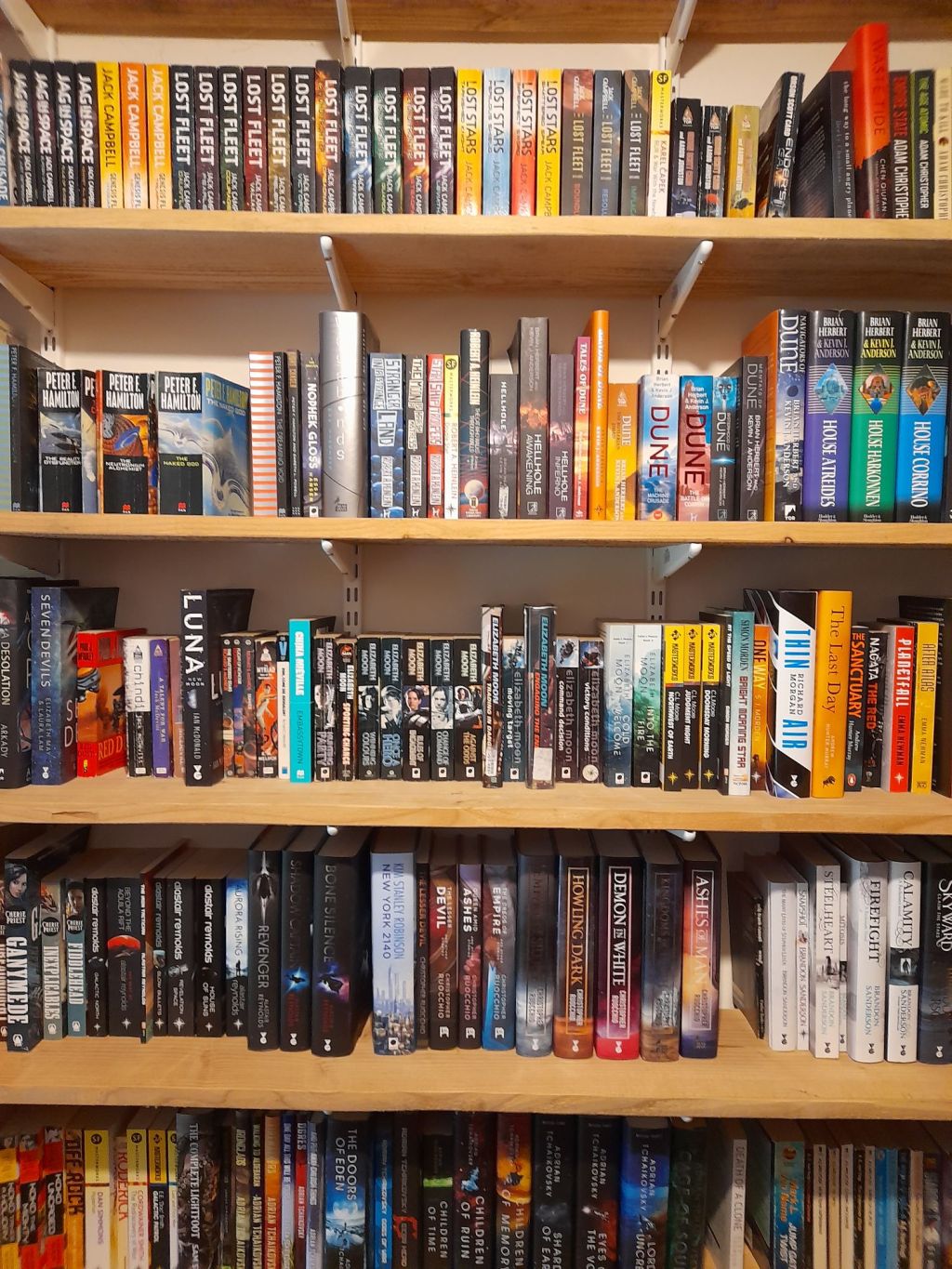
One of the results of a shift to a more image-focused way of talking about books is that pictures are now prioritised over words. Bookstagram (Book+Instagram) is filled with people showing off fancy special editions (the rise of which I’ve grumbled about before, and will surely grumble about again). BookTube is a major source of book haul videos where the host shows off a stack of books they have purchased or been given. These hauls do bring awareness of books, but they are rarely accompanied by any meaningful review, and often those books never receive further coverage. This pursuit of aesthetics even extends to bookshelves, which are becoming depressingly uniform lines of immaculate (possibly even unread) hardbacks or matching editions.
Content Creation
All of this is coupled with a change in how people who read books talk about themselves. In the old times, we were readers, bookworms, or book lovers. I have always called myself a reader, then a reviewer. If I’m feeling self-important, I go by science fiction academic, which is technically true but also self appointed. Vast swathes of the bookish community now self-identify as ‘content creators,’ a label that covers everything from bloggers and Instagrammers to Booktubers and BookTokkers. The goal seems to be less about discussing books and more about consuming books to create a product. This content ranges from serious reviews to endlessly regurgitated top ten lists, rankings, and favourites lists. Never mind the fact that it always seems to be the same books getting discussed (If I ever again see Sun Eater referred to as underrated, I will quite possibly throw a chair at someone), but these simplistic posts crop up in an endless game of whack-a-mole, and we never actually learn much about the books in question. As an aside, the idea of the ‘content creator’ as a character in their own right is also a phenomenon that should be looked into by experts. We all adopt personae online, but some take it further than others.
In Conclusion
As you can probably guess, I’m less than impressed with some of these changes over the years. So if you need me, I’m going to stay right here on my outdated blog, doing what I’ve always done. Talking about science fiction.


